50 Podcast Episode Ideas When You Are Stuck
Running out of episode ideas happens to everyone, usually around episode 8 or 9 when the easy topics are gone. The fix is to stop hunting for one perfect idea and instead pull from a few repeatable formats that you can refill every season. Below are 50 specific episode ideas grouped by type, plus a simple way to keep your list full so you are never stuck at the start of a recording day.
Why you actually run out of ideas
Most creators do not run out of ideas. They run out of ideas that feel big enough. You skip the small, useful episode because it seems boring, then you sit empty because nothing feels worthy. The truth is the steady, practical episodes are the ones your audience saves and shares.
The second cause is treating each episode as a fresh invention. If every show needs a brand new concept, you will burn out fast. Formats solve this. A "listener questions" format or a "one tool, deep look" format can produce dozens of episodes over a year with very little planning each time.
The third cause is recording too rarely. When you record one episode at a time, every session feels high stakes. Batching two or three episodes in a single booking lowers the pressure and makes it easier to try a lighter idea. If you want help planning that out, read how to batch record podcast episodes.
Solo and personal episodes (ideas 1 to 12)
These need no guest and no prep beyond your own thoughts, which makes them perfect for filling gaps.
- A behind-the-scenes look at how you got started in your field.
- The five mistakes you made early on and what you would do differently.
- A day-in-the-life walkthrough of your actual routine.
- Your honest review of a tool, book or service you use every week.
- A "things I changed my mind about" episode.
- The questions people ask you most often, answered in one sitting.
- A short, focused tutorial on one skill you know well.
- Your reaction to a recent news story in your niche.
- A list of resources you wish you had when you started.
- A money episode: what it actually costs to do what you do.
- The advice you ignored that turned out to be right.
- A "state of the industry" update for your topic this year.
If you find solo recording awkward, working out a loose structure helps a lot. The piece on solo vs cohosted vs interview podcasts covers how to keep a one-person show moving.
Interview and guest episodes (ideas 13 to 24)
Guests carry an episode and bring their own audience, which is why interview shows tend to grow faster.
- A peer in your field who does things differently than you.
- A complete beginner who is one year into the journey you are 10 years into.
- A customer or listener with a strong story.
- Someone whose work you publicly disagree with, handled respectfully.
- A behind-the-scenes professional most people never hear from.
- Two guests with opposing views in the same room.
- A "how I built this" interview with a local founder.
- A mentor or someone who shaped your career.
- A rapid-fire interview using a fixed set of questions for every guest.
- A returning guest, one year later, to see what changed.
- A specialist who can explain something complicated in plain terms.
- A friend or family member outside your industry for a fresh angle.
Booking the right people is its own skill. Once you have a guest confirmed, how to get podcast guests walks through the outreach that actually gets replies, and a professional video setup makes guest episodes look far more professional on video.
Listener and community episodes (ideas 25 to 34)
These episodes pull your audience into the show, which builds loyalty and gives you endless future material.
- A full Q&A built from listener questions.
- Reacting to listener voice notes or comments on air.
- A "you asked, I tested it" episode where you try a listener suggestion.
- Highlighting listener wins or projects.
- A debate where you take the unpopular side of a listener poll.
- Answering the one question you get asked the most, in depth.
- A myth-busting episode based on common misconceptions in your comments.
- A community spotlight on a person doing good work in your niche.
- An open call episode where the topic is chosen entirely by your audience.
- A "fix my problem" episode where you coach one listener live.
To keep the questions coming, ask for them at the end of every single episode. Growing that engaged base is covered in growing your podcast audience in Pakistan.
List, story and themed episodes (ideas 35 to 44)
These are easy to script and easy to clip for short-form video, which makes them efficient to produce.
- "Top 10" of anything relevant to your niche.
- A myth versus reality breakdown.
- A timeline of how something in your field changed over the years.
- A "things nobody tells you" list.
- A case study taking apart one success or failure in detail.
- A predictions episode for the next 12 months.
- A "starter pack" episode for total beginners.
- A glossary episode explaining the jargon in your space.
- A seasonal or holiday-themed episode tied to the calendar.
- A "best of" episode pulling the strongest moments from past shows.
Here is a quick way to match each format to the effort it takes, so you can pick based on how much time you have.
| Episode type | Prep needed | Best for |
|---|---|---|
| Solo or personal | Low | Filling gaps fast |
| Interview | Medium | Growing your audience |
| Listener Q&A | Low | Building community |
| List or themed | Low to medium | Easy short-form clips |
| Deep case study | High | Flagship episodes |
Format and experiment episodes (ideas 45 to 50)
Once in a while, break your own pattern. These episodes keep the show interesting for you and surprise your audience.
- A live-streamed episode with real-time chat. See live streaming your podcast across platforms for the setup.
- A short 10-minute "mini" episode on a single tight topic.
- A roundtable with a small panel instead of one voice.
- A "swap" episode where you and another host trade shows for a week.
- A fully visual episode built around a screen share or demo, which works best with a green screen and good lighting.
- A "no script" episode where you and a guest just talk for an hour.
How to keep your idea list full
The real fix for getting stuck is a running list you add to all week, not a panicked search on recording day. Keep a single note on your phone. Every time a question, argument or topic comes up in real life, drop one line into it. Within a month you will have more ideas than you can record.
Use this simple weekly habit:
- Spend five minutes on Monday adding any idea you heard over the weekend.
- On Wednesday, pick the three strongest and slot them onto your calendar.
- Before each recording, choose one easy format and one ambitious one, and batch them in the same session.
- After recording, note any tangents worth their own future episode.
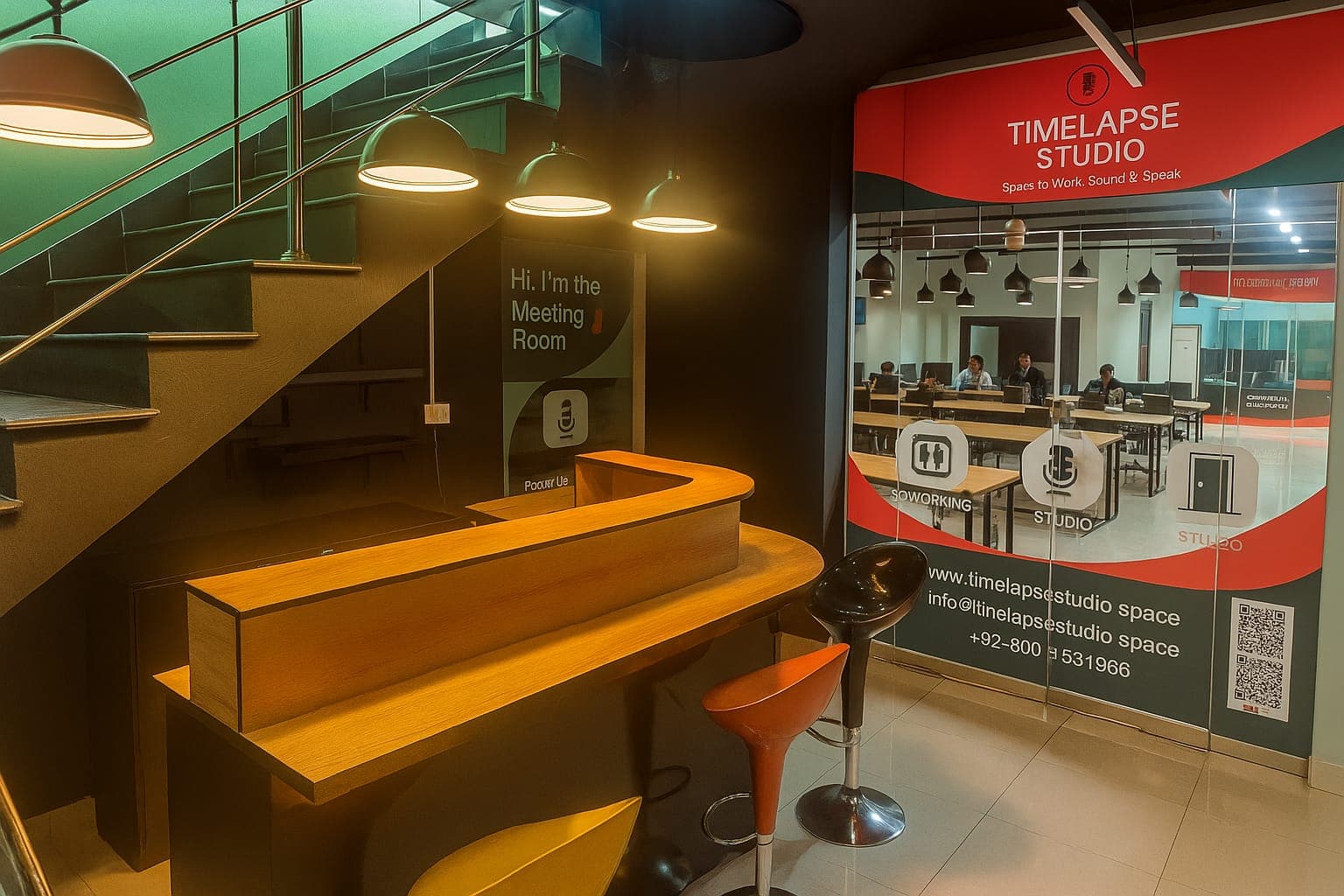
Batching two or three of these in one booking is where the time and money savings show up. At Timelapse Studio in Johar Town, Lahore (near Emporium Mall) audio recording starts at Rs 5,000 per hour and video from Rs 9,000 per hour, with up to 30% off on monthly or long-term bookings, so a regular schedule costs noticeably less per episode. You can see the full breakdown on the packages page, and if you are weighing audio against video, audio vs video podcast: which should you start lays out the trade-offs.
Frequently asked questions
How many episode ideas should I have before I launch? Aim for at least 10 planned before you publish episode one. That buffer keeps you consistent through the first two months, which is when most shows quietly stop. The how to plan your first 10 podcast episodes guide is built exactly for this.
What if my niche feels too small for 50 ideas? A narrow niche usually has more ideas, not fewer, because you can go deep where a broad show can only skim. Mix formats (solo, guest, listener Q&A) and the same topic can fuel many different episodes.
How long should each of these episodes be? There is no fixed rule, but list and solo episodes often work well at 20 to 40 minutes, while interviews can run 45 to 60. Match the length to the value, not a target number.
Can I reuse one recording for more than one episode? Yes. A single long interview can become a full episode plus several short clips for Reels and Shorts. See turn one episode into ten clips for how to stretch one session further.
Is it better to record these at home or in a studio? Home works for testing, but a studio gives you cleaner audio, professional video and a crew so you can focus on the conversation. You can compare them in is a podcast studio worth it vs home.
Pick three ideas from this list, then book a session at Timelapse Studio and record them all in one sitting.
Record at our Lahore studio
Audio and video podcast sessions with the gear and crew handled. Check the pricing or grab a slot.